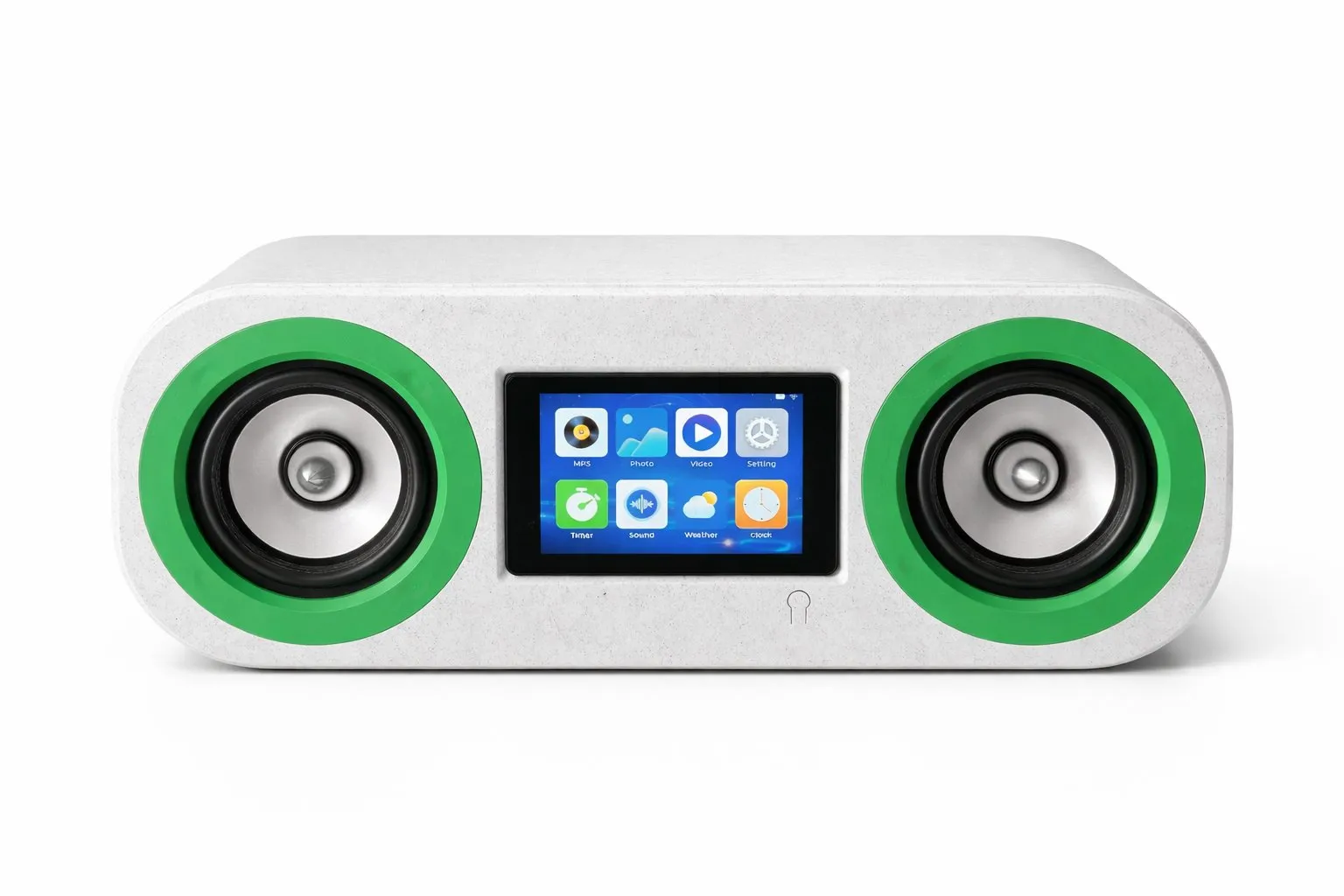
From prototype to product
The first generation adapted an off-the-shelf ESP32-S3 touch-display module into a story player with local SD content and a custom enclosure. It proved the idea — and its limits: battery integration introduced audible noise, and a tailored UI was hard to realise on that module.
Second generation
The current platform runs on ESP32-P4 with an ESP32-C6 companion, a 4.3-inch display and an LVGL interface. The library is scanned from the SD card and turned into a runtime JSON catalog with covers and chapters, so new stories need no firmware change. Audio runs through an ES8311 codec into a Tang Band full-range driver with passive radiators in an enclosure of about 1.2 litres.
Current state
Audio and library handling are mature; cover art and progress UI are in active work. In parallel, the product goes through problem-validation interviews and field research in the Innovation Sprint AI xpress.